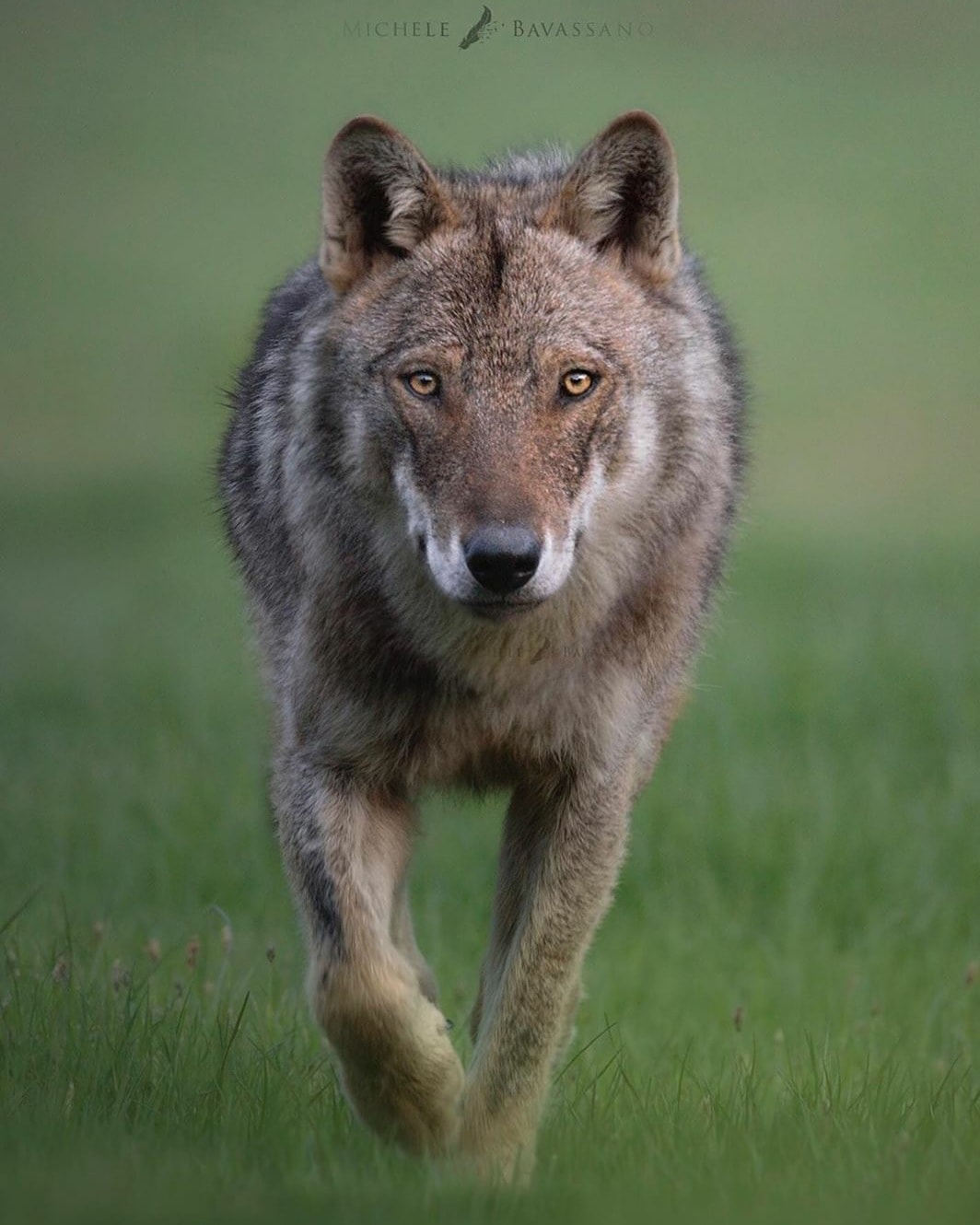
The wolf (Canis lupus italicus) is a magnificent predator, intelligent and highly adaptable to the various environments found in the protected areas of the Apennines. Fast and resilient, it is at the top of the food chain. It weighs between 25 and 40 kg and stands 60–70 cm tall at the withers.
Feeding and habits
It is a social animal capable of communicating with body language, territorial and living in small packs. It can also travel long distances, especially young solitary wolves dispersing. It has highly developed senses, much more so than a dog, even though they belong to the same family. In addition to howling, the pack marks its territory with scent markings (faeces and urine). The wolf’s diet is varied, feeding mainly on wild boar, roe deer, deer, rodents and, occasionally, domestic livestock. In the absence of prey, it will also eat carrion, berries and wild fruit.
Sociality and relationships with humans
The wolf is a fascinating and magnetic wild animal, protected in Italy since the 1970s because it was at risk of extinction. It has inspired a long walk of about 200 km, starting from Tivoli and ending in Civitella Alfedena, where you can explore the territory in which it lives on foot and perhaps encounter traces left by its passage: La Via dei Lupi (The Way of the Wolves).
When we walk, we are captivated by the incredible views before us, but, step by step, let us not forget to also observe the ground we walk on and read the signs of nature that lives alongside us.
[Photo by Michele Bavassano]